[To Tweet or not to Tweet....]
On Twitter, we saw a 500% increase in Tweets from Japan as people reached out to friends, family and loved ones in the moments after the March 2011 earthquake. This video shows the volume of @replies traveling into and out of Japan in a one-hour period just before and then after the earthquake. Replies directed to users in Japan are shown in pink; messages directed at others from Japan are shown in yellow.
Showing posts with label earthquake. Show all posts
Showing posts with label earthquake. Show all posts
Wednesday, July 13, 2011
Tuesday, July 12, 2011
EARTHQUAKE DETECTION > Volunteers help California build quake sensor network
| Image courtesy of USGS.gov |
Published 12 July 2011
Thousands of residents across California are helping the U.S Geological Survey (USGS) build a dense network of seismic sensors across the state; as part of the Quake Catcher Network, Californians are being asked to place 6,000 seismic sensors in their homes to help geologists study earthquakesThousands of residents across California are helping the U.S Geological Survey (USGS)build a dense network of seismic sensors across the state.
As part of the Quake Catcher Network, Californians are being asked to place 6,000 seismic sensors in their homes to help geologists study earthquakes. Last weekend the program was introduced in the San Francisco Bay Area with the help of University of California, Berkeley and Stanford University.
“With thousands of volunteers hosting our seismic sensors, forming dense networks in these regions, we’ll be able to get data on a level of detail and with a degree of accuracy that we could only dream about before” said Jesse Lawrence, assistant professor of geophysics at Stanford University, where the project is based.
The sensors can be plugged into a computer’s USB port and need to be firmly secured to the ground to prevent false readings. Using special software and an internet connection, data is transmitted from the device back to Stanford University, where the information is being collected.
Wednesday, July 6, 2011
JAPAN > Plans Safety Review for Every Atomic Reactor
Japan Plans Safety Review for Every Atomic Reactor
 |
| Image courtesy of: http://www.nucleartourist.com/world/japan.htm |
The "stress tests" would take place in addition to standard risk audits, Jiji Press quoted Japanese Industry Minister Banri Kaieda as saying.
"Although the safety of nuclear power plants in Japan has already been ensured, we will be doing the stress tests to have Japanese people feel safer," Kaieda said (Jiji Press).
Meanwhile, a trace amount of cesium 137 has turned up in Tokyo's public water supply, the Dow Jones Newswires reported on Monday.
A quantity drawn on Saturday had .14 becquerels per kilogram of the radioactive substance, down from the .21 becquerels found in a April 22 check, the Tokyo Metropolitan Institute of Public Health said. Cesium 137 was the only contaminant seen in the fluid, the organization indicated.
Water containing as much as 100 becquerels per kilogram is considered reasonable for consumption by very young children (Hiroyuki Kachi, Dow Jones Newswires, July 4)

 Labels:
accident,
earthquake,
Japan,
lessons learned,
mass casualty,
mitigation,
natural disaster,
nuclear
Labels:
accident,
earthquake,
Japan,
lessons learned,
mass casualty,
mitigation,
natural disaster,
nuclear
Wednesday, May 25, 2011
Japan > Fuel Melted in Additional Japan Nuclear Reactors: Operator
Fuel Melted in Additional Japan Nuclear Reactors: Operator
Tuesday, May 24, 2011| photo courtesy channel4.com |
Nuclear material melted down inside three reactors at Japan's Fukushima Daiichi nuclear power plant after a March 11 earthquake and tsunami severely damaged the facility, according to an initial Tokyo Electric Power assessment made public on Tuesday (see GSN, May 23).
The finding suggests fuel in the six-reactor Fukushima plant's No. 2 and No. 3 reactors sustained a level of damage comparable to what Tokyo and independent specialists said the No. 1 reactor's material had experienced in the aftermath of the the March 11 events, Reuters reported. The devastating earthquake and tsunami left more than 20,000 people dead or missing in Japan (Shinichi Saoshiro, Reuters I, May 24).
“We have analyzed data, which showed that it was highly likely that most of the fuel rods have melted. But it is unlikely that melting fuel rods could worsen the crisis because the melted fuels are covered in water,” the Associated Press quoted firm spokesman Takeo Iwamoto as saying (Associated Press/Washington Post, May 23).Full article
Thursday, May 19, 2011
Japan > Nuclear Plant Reactor Structure Opened to Personnel
Third Japan Plant Reactor Structure Opened to Personnel
Thursday, May 19, 2011 |
| image courtesy of gc.nautilus.org |
Personnel on Wednesday moved inside the Fukushima Daiichi nuclear power plant's No. 3 reactor site for the first time since a March earthquake and tsunami devastated the Japanese facility, Reuters reported (see GSN, May 18).
Plant operator Tokyo Electric Power dispatched two workers who remained in the building for 10 minutes and received under three millisieverts of radiation in that period. Plant personnel have been battling to prevent new radiation releases from the six-reactor facility, both by restoring critical cooling systems and implementing measures to help prevent additional hydrogen explosions. The March 11 events left more than 20,000 people dead or missing in Japan.
Personnel previously ventured into the outer structures of the plant's No. 1 and No. 2 reactors, the other two segments of the plant that were active at the start of the crisis (Reuters I, May 19).
"Workers being able to enter the reactors is perhaps the biggest improvement" since Tokyo Electric Power announced the schedule for bringing plant components under control, one atomic power specialist told Reuters. "They have made the ventilation of the reactor building possible and it also enables [Tokyo Electric Power] to install heat exchangers and pumps" (Reuters II, May 19).
The plant is due on Friday to receive a massive steel containment system for holding 10,000 metric tons of radiation-tainted fluid that has flooded parts of the facility, hindering restoration efforts, the operator said. In excess of 90,000 metric tons of irradiated liquid is thought to be pooling within and near the site (Reuters I).
The discovery of additional damage to plant components has forced the firm to dramatically revise its site stabilization strategy, which now includes the planned installation of technology to reinsert leaked reactor coolant into the systems, the Asahi Shimbun reported. Tokyo Electric Power, though, says it remains on schedule to put the site into "cold shutdown" five to eight months from now.
The company must also contend with the threat of contaminated fluid seeping into the earth or the Pacific Ocean (Eisuke Sasaki, Asahi Shimbun I, May 19).
Tokyo is permitting the International Atomic Energy Agency to dispatch a team to gather information on the crisis, Japanese Chief Cabinet Secretary Yukio Edano said on Tuesday. The U.N. group is expected to include roughly 20 atomic experts (Asahi Shimbun II, May 19).
China and Japan are due on Friday to hold their first bilateral meeting of atomic specialists to address the crisis, Kyodo News reported (Kyodo News, May 19)
.
.
Labels:
disaster,
earthquake,
Japan,
nuclear,
tsunami
Saturday, May 14, 2011
Turkey plans two earthquake resistant cities to move residents from vulnerable Istanbul
 |
| These Istanbul buildings are especially vulnerable Source: purdue.edu |
Infrastructure protection
To encourage residents to move away from seismically unsafe neighborhoods, Turkey's government recently announced that it will begin building two earthquake-resistant developments near Istanbul; the city of more than twelve million people currently sits near a major fault-line that could potentially kill thousands in the event of a major earthquake; engineers and seismic experts warn that Istanbul's poor construction, shoddy city planning, and overcrowding would result in many fatalities in the event of an earthquake; officials plan for the new urban centers to be home to roughly 1 million residents each; any move to the new settlements would be entirely voluntary Read more
Saturday, May 7, 2011
Post-Earthquake Haiti > Injuries Treated at a Field Hospital --- Haiti, 2010
CDC has done it again! Great statistical data for disaster relief medical personnel, and for that matter, first responders. This link takes you to the short 4 page summary version of the report. There is a much more indepth report that is a must read for medical response teams that is a 48 page .pdf. Both are great! Good readings!
CDC MMWR report January 7, 2011 / 59(51);1673-1677.
"On January 12, 2010, a 7.0-magnitude earthquake struck Haiti, resulting in an estimated 222,570 deaths and 300,000 persons with injuries. The University of Miami Global Institute/Project Medishare (UMGI/PM) established the first field hospital in Port-au-Prince, Haiti, after the earthquake (1). To characterize injuries and surgical procedures performed by UMGI/PM and assess specialized medical, surgical, and rehabilitation needs, UMGI/PM and CDC conducted a retrospective medical record review of all available inpatient records for the period January 13--May 28, 2010. This report describes the results of that review, which indicated that, during the study period (when a total of 1,369 admissions occurred), injury-related diagnoses were recorded for 581 (42%) admitted patients, of whom 346 (60%) required a surgical procedure. The most common injury diagnoses were fractures/dislocations, wound infections, and head, face, and brain injuries."
| photo courtesy of wn.com |
"On January 12, 2010, a 7.0-magnitude earthquake struck Haiti, resulting in an estimated 222,570 deaths and 300,000 persons with injuries. The University of Miami Global Institute/Project Medishare (UMGI/PM) established the first field hospital in Port-au-Prince, Haiti, after the earthquake (1). To characterize injuries and surgical procedures performed by UMGI/PM and assess specialized medical, surgical, and rehabilitation needs, UMGI/PM and CDC conducted a retrospective medical record review of all available inpatient records for the period January 13--May 28, 2010. This report describes the results of that review, which indicated that, during the study period (when a total of 1,369 admissions occurred), injury-related diagnoses were recorded for 581 (42%) admitted patients, of whom 346 (60%) required a surgical procedure. The most common injury diagnoses were fractures/dislocations, wound infections, and head, face, and brain injuries."
Labels:
CDC,
disaster,
earthquake,
emergency management,
field hospital,
Haiti,
medical,
military
Friday, May 6, 2011
JAPAN > Japan attempts "cold shutdown" at reactor no. 1
The great nuclear experiment...
Officials at the Tokyo Electric Power Company (TEPCO) hope to bring reactor no. 1 at the beleaguered Fukushima Daiichi nuclear plant to a "cold shutdown" by the end of the week; plant operators will attempt to bring the temperature inside the reactor below the boiling point of water so that it will no longer produce radioactive steam; the building housing reactor no. 1 must be vented so that all the radioactive air that has accumulated is released allowing workers to approach the reactor; once inside workers will inject cold water into the reactor's primary containment structure; injecting tons of water into a damaged containment unit that houses uranium makes some scientists uneasy Read more
 |
| Workers preparing to enter Fukushima reactor 1 // Source: asiaone.com |
Labels:
earthquake,
Japan,
nuclear,
tsunami
Thursday, May 5, 2011
SDF Spotlight > Japan State Defense Force
[Japanese Ministry of Defense, State Defense Force. Lots on the Great Eastern Japan Earthquake. It is in english.]
 |
| photo courtesy of: www.mod.go.jp/e/index.html |
Labels:
disaster,
earthquake,
Japan,
sdf,
tsunami
Wednesday, April 20, 2011
Video > Japan Earthquake 2011 Liquefaction Damage
Good article on liquefaction type earthquakes. There are a few silver linings in the clouds above Japan...the Video is 9:27 and is visually powerful.
Labels:
disaster,
earthquake,
gov't,
Japan,
lessons learned,
natural disaster,
nuclear,
preparedness,
reconstruction,
recovery,
research,
tornado,
tsunami,
video,
water
JAPAN > Fukushima Nuclear Accident Update Log 20APR2011
[This is an update from International Atomic Energy Agency in ref to the 7APR earthquake that happened, post 11MAR earthquake and tsunami. Good info, takes about 3 mins to read.]
 |
| photo courtesy of iaea.org |
Labels:
cbrne,
earthquake,
Japan,
nuclear
Monday, April 18, 2011


Saturday, April 16, 2011
JAPAN > Nuclear Company to pay Nuclear Evacuees

[TEPCO will distribute $660 million to 50,000 evacuees, initial payment, more to follow.]
Article: http://www.nytimes.com/2011/04/16/world/asia/16japan.html?_r=2&ref=world
Labels:
earthquake,
Japan,
nuclear
Monday, April 11, 2011
JAPAN > Aftershock (Monday 11APR2011) temporarily halts Fukushima cooling & TEPCO makes Public Apology 1 month later
| photo courtesy of japaneseautoport.com |
http://www.world-nuclear-news.org/RS-Aftershock_temporarily_halts_Fukushima_cooling-1104114.html
Labels:
earthquake,
Japan
Friday, April 8, 2011
Great Eastern Japan Earthquake - Silver lining...
[World Nuclear News is on Facebook]
 |
| World Nuclear News |
"We plan to prevent the waves from flooding inside the nuclear reactor buildings where important facilities in terms of safety such as power supply facilities and emergency diesel electric power generators are installed and to ensure the fundamental safety in the station," the company says. It promises to design the tide barriers and begin their construction in "a rapid manner."
Labels:
earthquake,
Japan,
nuclear,
tsunami
Video > Earthquakes happening on New Madrid faultline...for the past 4 days
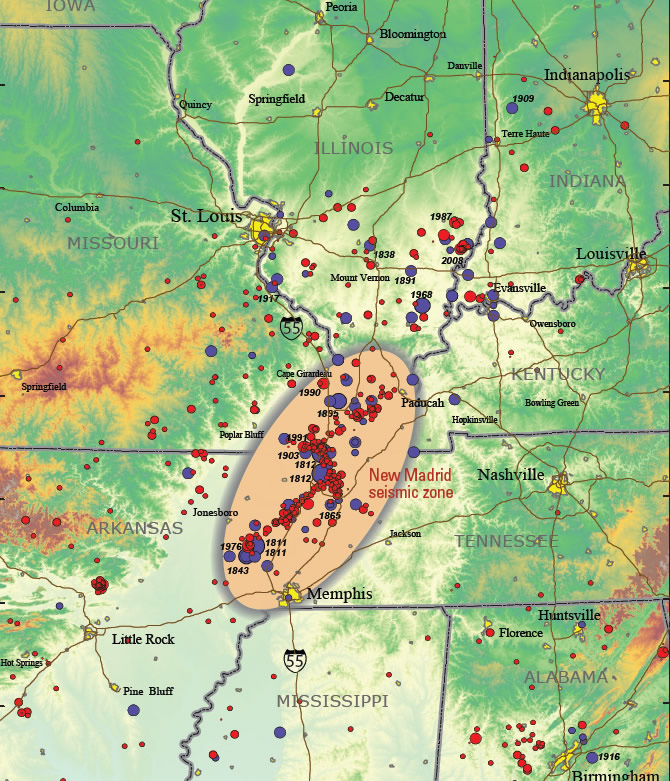 |
| just a reference map to area of activity |
Interesting youtube video, 11 mins long, conspiracy theorist proves USGS censoring data:
Video > Social Media saves a city: Japanese City’s Cry Resonates Around the World
 |
| Mayor of Minamisoma, Japan posts a plea for assistance on youtube!! News article... |
Labels:
communication,
disaster,
earthquake,
Japan,
natural disaster,
recovery,
relief,
Response,
social media,
tsunami,
video
Thursday, April 7, 2011
EPA's RadNet Air Monitoring Data - Updated Daily on JapNucDis
 [Kind of neat...take a gander at San Francisco's...BEFORE Japanese nuclear disaster and AFTER...makes one wonder...no I am not making these up...]
EPA's website:
Labels:
earthquake,
Japan,
nuclear
JAPAN > Marines Send Nuclear Team (CBIRF) to Japan to Help with Ongoing Crisis
 Marines and sailors offload supplies during a clean-up operation here April 3. The 31st Marine Expeditionary Unit, III Marine Expeditionary Force, is aiding local government authorities and personnel in the clean up after an earthquake and tsunami struck the island March 11. (U. S. Marine Corps photo by Cpl. Megan Angel/Released)
Published: April 1, 2011
SEOUL — A 155-member U.S. Marine force specially trained to work in chemical, biological, nuclear and radiological environments is expected to arrive Friday in Japan to help the Japanese government deal with the ongoing nuclear crisis.
According to the American Forces Press Service, the unit is part of the Chemical, Biological and Incident Response Force from the Naval Support Facility in Indian Head, Md. The unit will advise Japanese authorities about the ongoing crisis involving radiation leaking from the crippled Fukushima Dai-ichi nuclear power plant.The unit will bring equipment for agent detection and identification; casualty search, rescue and personnel decontamination; and emergency medical care and stabilization of contaminated personnel, the report said.
Meanwhile, U.S. Navy divers helped to reopen the harbor at Hachinohe, according to the press service. American ships used side-scan sonar to survey the harbor’s waterway, enabling divers to remove obstacles such as vehicles, a small storage building, 20-foot storage containers and 100-ton concrete blocks the tsunami washed out to sea.
Japan’s Maritime Self Defense Force and commercial divers are coordinating with U.S. 7th Fleet units to assess the port of Miyako and plan for clearance operations there, the report said. The Navy teams might do the same in the port of Oshima after completion of operations at Miyako.
Additionally, U.S. Navy barges containing 500,000 gallons of fresh water from Yokosuka are being used at the crippled nuclear power plant, according to the press service. The water will be used to replace salt water in the reactor cooling system to lessen the corrosive impact of salt from the sea water still being used for emergency cooling. Read more...
Subscribe to:
Posts (Atom)