Thursday, July 7, 2011

MILITARY > Cutting the Military Budget...

Panetta’s challenge: Not just cut, but cut quickly
photo courtesy  www.dodbuzz.com
By Philip Ewing 
Posted in Rumors


As Fred Kaplan points out in Slate, it does a penniless United States less good — and even less good for President Obama and other politicians — if DoD can’t yield big budget “savings” until years down the road. For practical and political reasons, Secretary Panetta will be charged with seeing what he can effectively cut soon, and that could make his job even more difficult, Kaplan writes:
If the goal is to find fast ways of cutting the deficit, cutting payrolls is fastest of all. When money is authorized to buy a weapons system, it takes a while—sometimes a long while—to spend that money. For instance, according to the Fiscal Year 2012 edition of the National Defense Budget Estimates (also known as the Pentagon’s “Green Book”; see especially Table 5–11), only 15 percent of the money budgeted for a Navy shipbuilding project actually gets spent in the first year. Another 25 percent is spent in the second year, 20 percent in the third, 15 percent in the fourth, 12.5 percent in the fifth, and still another 12.5 percent in the sixth. (Similar figures apply to building military aircraft, missiles, and armored vehicles.)
To spell out one implication of this unalterable fact of military contracting, the Fiscal Year 2012 budget includes $2 billion to buy one [Arleigh Burke-class] destroyer for the Navy. Of that sum, only $300 million (15 percent of it) will wind up being spent in the first year. By the same token, if Congress or the White House removed this $2 billion destroyer from the budget, only $150 million would be saved in the first year. (And the Pentagon would probably have to pay “cancelation costs,” which are routinely incorporated into weapons-procurement contracts.) In other words, killing weapons systems is not a very good way to cut the deficit quickly.

All this is why Kaplan believes the Army will be the biggest target in Austerity America, because cutting soldiers, and their payrolls and other benefits, frees up that money on the balance sheet much faster.
And if you want to pick on the Army, you also could argue that one of its biggest and potentially most expensive priorities, the Ground Combat Vehicle, may not survive in its present form. Lawmakers have scratched their heads as to why the Army even needs a big new armored personnel carrier. Although the brass has a clear case — its current generation of vehicles is maxed out, in terms of size and power, and the Army needs something that can carry an entire squad — all the budget blades flying in Washington may find a quick and easy target in the GCV, given how early it is in development. It’s just like anything else: The more momentum the program gets, the harder it will be to stop. Everyone in the Building and on the Hill understands this, and they’ll no doubt push or pull accordingly.
For what it’s worth, Kaplan sees the F-35 as a potential target, too — although as you’ll see, he got its name wrong:
Cutting Air Force or Navy personnel would mean getting rid of airplanes or ships, a move that would sire a separate set of controversies. (Then again, it’s likely that Panetta will cancel or cut back some planes and ships, if just to spread the pain; the Air Force and Navy’s troubled Joint Strategic Fighter, aka the F-35 stealth aircraft, is a likely candidate. But there will be limits here, as his predecessor, Robert Gates, already cut a few dozen systems, and further cuts would spark political fights, especially given the already-high unemployment rate.)
By contrast, cutting Army and, to some extent, Marine personnel would mean erasing brigades or divisions from the roster and warehousing their weapons—which could then be transferred to other units as training or replacement gear, for more savings still. None of this is necessarily to say that the Army or Marines should be slashed—only that they almost certainly will be, given the traditional end-of-wars syndrome, the enormous pressures on the federal budget, and (a new factor) an emerging coalition of anti-war Democrats and anti-spending, isolationist Republicans.

TECHNOLOGY > from space shuttle program is a big hit on Earth

image courtesy of:  www.science.kukuchew.com

By KEVIN D. THOMPSON

The Palm Beach Post

Tang. Velcro. Teflon.
What do these products have in common?
Many people mistakenly think they were born out of NASA’s space shuttle program. Truth is, none of them was invented for NASA shuttle missions, and all were commercially available products that were adapted for space travel use. Their use in orbit, however, probably contributed to their popularity.
So with the approach of the final shuttle launch, what types of technological advancements has NASA brought us?
Since 1976, more than 1,700 documented NASA technologies have benefited U.S. industry, improved our quality of life, and created jobs and industries. NASA says the space shuttle program alone has generated more than 100 technology spinoffs — commercially available systems, products or services that owe their existence to NASA-based technologies.
It’s almost impossible to find an area of everyday life that has not been improved by these spinoffs.
Think about it. Whether you drive a car, walk into your home, visit a hospital or just simply indulge in a recreational activity, chances are you’re coming into contact with a product that is the result of technology first developed by NASA.
For instance, homeowners are insulating their homes with the same lightweight, flexible material NASA uses to insulate low-temperature areas on space shuttles.

Goodyear Tire & Rubber Co. produced a radial tire with a tread life expected to be 10,000 miles greater than conventional radials by using a fibrous material it developed for NASA.
Read more: http://www.kansascity.com/2011/07/05/2995447/techsense-technology-from-space.html#ixzz1RRSRPiSr

FOOD > A Search Is Under Way for Tainted Sprout Seeds

[49 deaths and 4,100 illnesses later...2 mins read]

photo coutesy of:  m.ctv.ca
Authorities are frantically trying to trace all of the tainted fenugreek seeds from a large shipment linked to a deadly E. coli outbreak in Europe, saying the product was distributed more widely than previously thought.


In a new report, a large shipment of organic Egyptian fenugreek seeds was distributed to dozens of companies in at least 12 European countries, the European Food Safety Authority said on Tuesday. Investigators were still trying to determine if additional countries had received some of the seeds.
“The trace forward operation is becoming complex and widespread and may take weeks,” the report said, referring to efforts to locate the seed shipments.
Investigators are now focusing on a single shipment of more than 16 tons of Egyptian fenugreek seeds that was received by a German importer in December 2009, according to the report.
Authorities say that sprouts grown from the seed, often used in salads, were responsible for two major outbreaks of a rare strain of E. coli bacteria, known as O104:H4.

WEBINAR 19JUL2011 > Preparing For the Unexpected: The Trigger Events for Systemic Failure

Preparing For the Unexpected: The Trigger Events for Systemic Failure

Join us for a Webinar on July 19

This topic outlines the situation, complications and solutions to help leaders ensure the continuity of business operations in the face of unprecedented risks. The hypothesis is that a convergence of many long wave cycles is increasing the probability and impact of large scale disasters such as the incident in Japan. Surviving and thriving amidst these threats requires an enterprise resiliency plan that encompasses all internal functions, suppliers, and enterprise eco-system touch points. Are you prepared?

RARE EARTH ELEMENTS > Japanese discovery could undermine China's rare earth dominance


Published 7 July 2011 [5mins read]

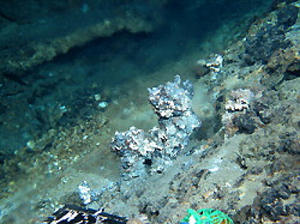
Undersea clusters of rare earths off the coast of Okinawa // Source: so-net.ne.jp
A new discovery by Japanese researchers could break China’s stranglehold over rare Earth metals.
Japanese geologists say they have found large deposits of rare Earth minerals on the floor of the Pacific Ocean. It is estimated that the mud of the Pacific Ocean contains 100 billion tons of rare Earth elements.
If geologists are able to mine for the minerals in a cost effective way, analysts believe this discovery could undermine China’s dominance. Currently, 97 percent of rare Earth metals are produced in China, but in recent years the country has imposed strict quotas and limited exports disrupting the global supply chain.
Yasuhiro Kato, an associate professor of earth science at the University of Tokyo and the leader of the team thatdiscovered the rare earth stores, said, “The deposits have a heavy concentration of rare earths. Just one square kilometer (0.4 square mile) of deposits will be able to provide one-fifth of the current global annual consumption.”  Read full article

FOOD > Microalgae : Texas' next big cash crop


Published 7 July 2011
There are an estimated 200,000 to 800,000 species of microalgae -- microscopic algae that thrive in freshwater and marine systems; scientists say microalgae offers a huge, untapped source of fuel, food, feed, pharmaceuticals, and even pollution-busters; it is set to be Texas' next big cash crop
Microalgae productiona facility // Source: co2captureandstorage.info
Just as corn and peanuts stunned the world decades ago with their then-newly discovered multi-beneficial uses and applications,Texas AgriLife research scientists in Corpus Christi think microalgae holds even more promise.
“It’s a huge, untapped source of fuel, food, feed, pharmaceuticals and even pollution-busters,” said Dr. Carlos Fernandez, a crop physiologist at the Texas AgriLife Research and Extension Center at Corpus Christi who is studying the physiological responses of microalgae to the environment. There are an estimated 200,000 to 800,000 species of microalgae, microscopic algae that thrive in freshwater and marine systems, Fernandez said.
Of all those species, only 35,000 species have been described, he said.

NUCLEAR > Nuclear Safety Journal Launched


Published 7 July 2011
Inderscience Publishers

Three Mile Island, Chernobyl, Fukushima: for the third time in twenty-five years a nuclear power plant suffered a serious accident, precipitating a global review of the way to govern nuclear safety and security; a publisher of scientific journal is launching a new journal -- International Journal of Nuclear Safety and Security (IJNSS) -- which will offer a forum for the serious discussion of nuclear power plants' safety
pThree Mile Island, Chernobyl, Fukushima: for the third time in twenty-five years a nuclear power plant suffered a serious accident, precipitating a global review of the way to govern nuclear safety and security.
The 11 March Fukushima accident was especially poignant because it came during — and may well put an end to — what was correctly termed a Nuclear Renaissance: as worries about climate change and the volatility of oil prices grew, interest in nuclear power generation was rekindled.
InderScience Publishers is launching a new journal — teInternational Journal of Nuclear Safety and Security (IJNSS) — which aims to address the growing interest in, and concern about, nuclear safety.
The publisher says that the international community must learn from these accidents in order to improve international co-operation, both in terms of crisis management and prevention of risks. IJNSS will provide an opportunity to exchange information on the implications of safe and secure operation of nuclear power plants and approaches taken by countries worldwide.   Full article
Among the topics which will be covered by the new journal:
  • Strategic, managerial, organizational issues; total quality management (TQM) and environmental management
  • Macroeconomics, nuclear economics and business
  • Technological advances, issues, innovation, hazards; role of information and communication technologies (ICTs)
  • Analysis/assessment methodologies, performance measurement
  • Governance, policy strategy, assessment, review
  • National/international environmental protection policy; ecosystem research
  • Ecological/environmental impacts; risk assessment/legal aspects of pollution
  • Waste disposal strategies; clean technologies
  • Energy security and risk assessment; policy, standards and regulations
  • Critical infrastructures design, protection, management
  • Risk assessment, control, characterization, perception, communications, models
  • Integrated risk assessment and safety management
  • Nuclear systems management, transport, resource development, power quality
  • Public policy, regulations, governance and nuclear use; public attitudes
  • Knowledge based policies and education; knowledge transfer

BIODEFENSE > Nano detector spots deadly anthrax

Published 7 July 2011

Methods in Molecular Biology #504: Biosensors and Biodetectors, Vol 2: Electrochemical and Mechanical Detectors, Lateral Flow and Ligands for Biosensors: Methods and Protocols Cover
image coutesy of powells.com
An automatic and portable detector that takes just fifteen minutes to analyze a sample suspected of contamination with anthrax is being developed by researchers in the United States. The technology amplifies any anthrax DNA present in the sample and can reveal the presence of just forty microscopic cells of the deadly bacteria Bacillus anthracis.
B. anthracis, commonly known as anthrax, is a potentially lethal microbe that might be used intentionally to infect victims through contamination of food and water supplies, aerosolized particles, or even dried powders, such as those used in bioterrorist attacks in the United States in fall 2001. Detection is crucial to preventing widespread fatalities in the event of an anthrax attack.

The complexity of the microbe’s biology have so far made it difficult to build a portable system that can be employed quickly in the field. That said, there are several systems available that use PCR to amplify a particular component of the genetic material present in anthrax and then to flag this amplified signal. These systems are fast and sensitive but do not integrate sample preparation and so are not as convenient as a single detector unit would be.  Full article


FREE > More than 4,000 National Academies Press PDFS now available to download for free

The National Academies Press
[What a great deal this is! A must read!]

June 2, 2011 · by 

The National Academies—National Academy of Sciences, National Academy of Engineering, Institute of Medicine, and National Research Council—are committed to distributing their reports to as wide an audience as possible. Since 1994 we have offered “Read for Free” options for almost all our titles. In addition, we have been offering free downloads of most of our titles to everyone and of all titles to readers in the developing world. We are now going one step further. Effective June 2nd, PDFs of reports that are currently for sale on the National Academies Press (NAP) Website and PDFs associated with future reports* will be offered free of charge to all Web visitors.
For more than 140 years, the NAS, NAE, IOM, and NRC have been advising the nation on issues of science, technology, and medicine. Like no other collection of organizations, the Academies enlist the nation’s foremost scientists, engineers, health professionals, and other experts to address the scientific and technical aspects of society’s most pressing problems. The results of their work are authoritative and independent studies published by the National Academies Press.
NAP produces more than 200 books a year on a wide range of topics in science, engineering, and health, capturing the best-informed views on important issues.

DETECTION > TSA could begin searching for explosives hidden inside you

photo courtesy of HSNW

[2 mins read] 

TSA could begin searching for explosives hidden inside you 

Published 7 July 2011
Government intelligence officials are now warning airlines that terrorists could be using surgically implanted explosives to bypass security measures; there is no information regarding a specific plot or threat, but airlines could begin to implement additional screening procedures as the current body scanners cannot effectively detect bombs hidden inside an individual; last year, al Qaeda operatives in Iraq implanted two dogs with explosives, but the dogs died before they could be loaded onto a U.S.-bound plane.

According to the Los Angeles Times, U.S. officials have received new information that suggest terrorists may be seriously considering surgically implanting explosive devices to circumvent existing screening procedures.
In response, Nicholas Kimball, a spokesman for the Transportation Security Administration (TSA), said airline passengers flying into the United States will likely face additional screening measures.
“These measures are designed to be unpredictable, so passengers should not expect to see the same activity at every international airport,” Kimball said. “Measures may include interaction with passengers, in addition to the use of other screening methods such as pat-downs and the use of enhanced tools and technologies.”
Current body scanners cannot detect explosive materials hidden in body cavities or below the skin, so airport screeners will rely on explosive trace detection swabs.
In 2009, in a failed suicide bomb attack aimed at assassinating Prince Mohammed Bin Nayef, the head of Saudi Arabia’s counterterrorism operations, an al Qaeda operative hid a pound of high explosives and a detonator in his rectum.  Read more

TALIBAN HOTEL ATTACK > Low Death Toll, High Psychological Value | STRATFOR

STRATFOR.COMJuly 7, 2011 | 0853 GMTBy Scott Stewart

Social Media as a Tool for Protest
At about 10 p.m. on June 28, a group of heavily armed militants attacked the Intercontinental Hotel in Kabul, Afghanistan. According to government and media reports, the attack team consisted of eight or nine militants who were reportedly wearing suicide vests in addition to carrying other weapons. At least three of the attackers detonated their vests during the drawn-out fight. Afghan security forces, assisted by International Security Assistance Force (ISAF), needed some eight hours to clear the hotel of attackers. One group of militants even worked their way up to the roof of the hotel, where they fired several rocket-propelled grenades.
The attack resulted in the deaths of 12 people, as well as all the militants. The Taliban had a different take on the attack, posting a series of statements on their website claiming responsibility and saying the assault was conducted by eight operatives who killed 90 people and that the real news of their success was being suppressed. (Initially, the Taliban claimed to have killed 200 in the attack but reduced the toll to 90 in later statements.)
Read more: Taliban Hotel Attack: Low Death Toll, High Psychological Value | STRATFOR 

Wednesday, July 6, 2011

JAPAN > Plans Safety Review for Every Atomic Reactor

Japan Plans Safety Review for Every Atomic Reactor

Image courtesy of: http://www.nucleartourist.com/world/japan.htm 

The "stress tests" would take place in addition to standard risk audits, Jiji Press quoted Japanese Industry Minister Banri Kaieda as saying.
"Although the safety of nuclear power plants in Japan has already been ensured, we will be doing the stress tests to have Japanese people feel safer," Kaieda said (Jiji Press).
Meanwhile, a trace amount of cesium 137 has turned up in Tokyo's public water supply, the Dow Jones Newswires reported on Monday.
A quantity drawn on Saturday had .14 becquerels per kilogram of the radioactive substance, down from the .21 becquerels found in a April 22 check, the Tokyo Metropolitan Institute of Public Health said. Cesium 137 was the only contaminant seen in the fluid, the organization indicated.
Water containing as much as 100 becquerels per kilogram is considered reasonable for consumption by very young children (Hiroyuki Kachi, Dow Jones Newswires, July 4)

CBRNE > Enzyme Might Hold Key to Countering Nerve Agents

G-Type Nerve Agents
Military Chemical Agent Sign for "G agents"

Enzyme Might Hold Key to Countering Nerve Agents


Drugs produced from a natural enzyme could one day be used to protect people exposed to lethal nerve agents, the U.S. National Institutes of Health said on Friday (see GSN, April 28).
The health agency is providing funding for work by Israel's Weizmann Institute of Science to develop medications that could disassemble organophosphate chemicals used in "G-type" nerve agents such as sarin and soman.
"Drugs based on [this] approach would be a valuable addition to our nation’s ability to mount an effective medical response in the event of a chemical emergency," David Jett, head contact for the NIH Countermeasures Against Chemical Threats program, said in a press release.
Sarin was notably used by the Japanese Aum Shinrikyo cult in two attacks that killed 20 people in 1994 and 1995 (see GSN, March 8).
The U.S. chemical arsenal, which is due to be fully eliminated in about 10 years, also includes sarin (seeGSN, July 5). For complete article 

TECHNOLOGY > Siemens chooses Verizon for global identity authentication


Siemens AG, the German industrial conglomerate, has chosen a Verizon solution to authenticate users of Siemens’ communications systems, thereby increasing the security of its internal and external communications and Web application delivery.
Siemens’ in-house Public Key Infrastructure (PKI) solution and user identity certificates are now fully authorized by Verizon’s OmniRoot certificate chaining services, which are relied on by nearly all Internet and phone browsers, well as email clients and applications.
“It is increasingly difficult -- but also increasingly important -- for global companies to enable and ensure secure communications,” said Rainer Henkelmann, chief information security officer of Siemens. “A significant part of our business takes place online -- in an increasingly extended enterprise environment, with customers and suppliers, as well as our own employees -- and we need to ensure that our data and information is secure. Verizon’s globally trusted solution and expertise have enabled us to build a secure environment that supports our global business needs while simultaneously decreasing our costs.”

TECHNOLOGY > New Android facial biometric app available

New Android facial biometric app available
Published 5 July 2011

Biometrics & Authentication Sector report from Homeland Security NewsWire
A new app for Android smartphones allows users to secure their phones using facial biometrics; the Visidon Applock application, which is currently available for free, locks a user’s apps until their identity is verified using facial biometrics

A new app for Android smartphones allows users to secure their phones using facial biometrics.

The Visidon Applock application, which is currently available for free,locks a user’s apps until their identity is verified using facial biometrics.

The app requires phones or tablets to have the Android 2.3 operating system or higher as well as a front-facing camera. Visidon is currently working on a version that can be used for phones without front-facing cameras.

In the event that the facial recognition does not function properly or results in a false negative, users have the ability to punch in a password to override the system.

The TalkAndroid newswire says that the app is something users should keep an eye on as it will continue to be refined.  For more